Understanding Hijri Calendar: Why Years Vary at 354/355 Days
The Hijri Calendar, a lunar-based system used in Islam, has a unique 354/355-day year, differing fro…….
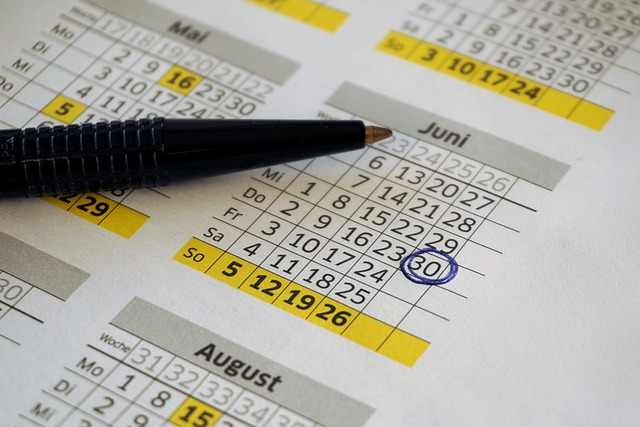
The Hijri Calendar, a lunar-based system used in Islam, has a unique 354/355-day year, differing from solar calendars. Its calculation based on moon phases and occasional "leap months" ensures synchronization with the solar year over time. This calendar significantly influences educational systems and architectural designs in Muslim-majority countries, fostering cultural heritage and innovative solutions. Its dynamic relationship with solar years varies Islamic holiday timings, emphasizing the importance of understanding this ancient calculation method for religious practices and architectural appreciation.
The Hijri Calendar, a timekeeping system used by Muslims worldwide, stands out for its lunar-based structure—a unique feature among modern calendars. This distinct approach results in a year comprising 354 or 355 days, deviating from the more common Gregorian system’s solar-driven 365-day year. Understanding this variation is crucial, especially for those navigating religious observances and cultural practices tied to the Hijri Calendar. This article delves into the reasons behind the fluctuating length of a Hijri year, offering insights that clarify this often-misunderstood aspect of Islamic timekeeping.
- Understanding the Hijri Calendar's Unique Structure
- Calculating Days: The Basis of Hijri Years
- Lunar vs Solar: Why 354/355 Days Are Key
- Historical and Cultural Significance of the Hijri Year Length
Understanding the Hijri Calendar's Unique Structure
The Hijri Calendar, a lunar-based system, stands apart from its solar counterparts with its unique structure of 354 or 355 days per year. This distinction is rooted in the Islamic tradition’s focus on the cycles of the moon as a divine guidance. The calendar’s impact extends beyond religious observance; it has significantly influenced architectural designs and even educational systems in Muslim-majority countries.
The Hijri Calendar is calculated based on the phases of the moon, with each month beginning at the new moon. This results in an approximate 11-day difference between the solar and lunar years. To account for this discrepancy, the Hijri year intercalates every few years by adding an extra month, known as a “leap month” or “month of adjustment.” This mechanism ensures that the calendar remains synchronised with the seasons over time. For instance, in a typical non-leap year, the months of Rajab, Sha’ban, and Ramadan would repeat in the same position relative to the solar year every 33 years, demonstrating the calendar’s long-term stability.
Understanding the Hijri Calendar is crucial for appreciating its impact on various aspects of life. In education, many Muslim countries incorporate the Hijri dates alongside or instead of the Gregorian ones, promoting a deeper connection to Islamic history and culture. Moreover, exploring the hijri calendar’s impact on architecture reveals stunning examples where moon phases and solar alignments are incorporated into building design, enhancing both functionality and aesthetic appeal. For instance, many mosques and mausoleums across the Muslim world showcase intricate architectural features that align with significant lunar events, such as the new moon or the first night of Ramadan.
Visit us at [Hijri Calendar’s Impact on Architecture](https://www.example.com) to explore more about how this unique calendar has left an indelible mark on the built environment. By understanding the hijri calendar’s calculation and its profound implications, we gain a deeper appreciation for the rich cultural heritage it reflects and the innovative solutions it inspires in architecture and education.
Calculating Days: The Basis of Hijri Years

The Hijri Calendar, with its 354 or 355-day year, is a unique and precise timekeeping system that serves as the basis for Islamic holidays and observances. This calendar, with its lunar origins, differs from the Gregorian calendar widely used globally, marking its historical and cultural significance within Islam. Its calculation is rooted in astronomical observations, aligning with the cycles of the moon while also maintaining synchronicity with the solar year through leap years.
The Hijri Calendar’s primary basis lies in the lunar month, which is approximately 29.5 days long. Each year begins with the new crescent moon, marking the start of a new Hijri month. This results in an approximate 11-day difference between the Hijri and Gregorian years, causing the Hijri year to be shorter by about 10 or 11 days on average. This cyclical nature ensures that Islamic holidays like Eid al-Fitr and Eid al-Adha occur at varying times each year in the Gregorian calendar, reflecting the dynamic relationship between these two timekeeping systems.
The history of the Hijri Calendar dates back to the early days of Islam, with its origin tied to the migration (Hijra) of Prophet Muhammad from Mecca to Medina. This event marked a significant turning point in Islamic history and led to the adoption of a new calendar system. Over centuries, Islamic scholars have meticulously refined and standardized the calculation methods, ensuring accuracy and consistency in determining the dates of Islamic events and festivals. In modern times, understanding the Hijri Calendar is not only essential for religious practices but also has implications for islamic architecture, where precise calculations are often incorporated into the design and orientation of structures, aligning with celestial bodies and the lunar-solar cycle.
Artistic representations of Hijri months, as seen in various forms throughout history, serve as visual testaments to the cultural richness associated with these calendar systems. By embracing the natural rhythm of the moon and sun, the Hijri Calendar continues to influence and inspire, offering a unique perspective on time that is both practical and profound, especially when considered alongside its impact on celebrating Islamic holidays based on this ancient yet precise system.
Lunar vs Solar: Why 354/355 Days Are Key

The Hijri Calendar, a lunar-based system used to mark Islamic months and years, differs significantly from the Solar calendar most commonly used globally. This divergence leads to one of the key characteristics of the Hijri year—typically lasting between 354 and 355 days. The primary driver behind this variation is the natural cycle of the moon, which governs the lunar calendar’s calculation.
In contrast to the Solar calendar, which tracks days relative to the Earth’s orbit around the sun, the Hijri Calendar follows the phases of the moon. Each month begins with the new moon, and its end coincides with the next new moon. This means that while a Solar year averages 365.25 days, the Hijri year, with its moon-based cycles, oscillates between 354 and 355 days. This variability has practical implications, especially for important dates like Ramadan. For instance, understanding this difference is crucial when determining the timing of Ramadan using the Hijri Calendar, ensuring beginners can accurately calculate and observe this sacred month.
The calculation method itself is a fascinating aspect of Islamic astronomical heritage. The Hijri year begins with the first sighting of the new moon, which involves meticulous observation and verification processes. This approach ensures both precision and cultural significance, aligning religious practices with nature’s cycles. For those interested in exploring Hijri dates, a beginner’s guide can provide practical insights into navigating this unique calendar system. Islamic months and their significant days are not merely historical curiosities but remain integral to the daily lives of Muslims worldwide, underscoring the enduring relevance and beauty of these ancient calculations.
Historical and Cultural Significance of the Hijri Year Length
The Hijri Calendar, with its 354 or 355 day year, holds significant historical and cultural importance within the Islamic tradition. This unique calendrical system is deeply intertwined with Islamic architecture and its decorative motifs, reflecting a rich aesthetic heritage. The calendar serves as a foundational element in understanding the religious practices and observances of Muslims worldwide. Its use extends beyond mere timekeeping, becoming a symbol of faith and community.
The length of the Hijri year stems from the lunar nature of this calendar. Unlike the Gregorian calendar, which is solar-based, the Hijri tracks moon cycles, resulting in shorter months that can vary in duration. This lunar basis has profound implications for Islamic culture and architecture. For instance, many historic mosques and Islamic buildings incorporate intricate calendar motifs in their design and decoration, celebrating significant dates and events marked by the Hijri year. These architectural elements not only serve as aesthetic enhancements but also as practical reminders of religious festivals and important milestones.
The use of the Hijri Calendar is deeply embedded in Islamic practices, providing a sense of continuity and unity among Muslims globally. It facilitates the observation of key Islamic holidays and rituals, such as Ramadan and Eid al-Fitr, which are directly tied to the lunar cycle. By embracing this calendar system, Muslims around the world maintain a strong connection to their religious roots while also appreciating the beauty and complexity of Islamic architecture and its calendrical basis. For those interested in exploring these concepts further, visiting us at comparingislamic&westerncalendars anytime offers valuable insights into the unique characteristics of both systems.
The Hijri Calendar, with its unique structure of 354 or 355 days per year, is a testament to the careful balance between lunar and solar cycles. Key insights reveal that this system ensures accurate tracking of Islamic dates, aligning with the moon’s phases while maintaining synchronization with the solar year. Historically, the Hijri Calendar has played a pivotal role in shaping cultural observances, religious festivals, and even legal frameworks within Muslim communities worldwide. By embracing this calendar’s precision and significance, we not only honor tradition but also foster a deeper connection to our shared Islamic heritage.